What Is Elemar (lidocaine patch 5%)
ELEMAR (LIDOCAINE), treats nerve pain caused by shingles. It works by making your skin feel warm or cool and numbing the affected area. This blocks pain signals going to the brain.
Elemar (Lidocaine 5% patch (Lidoderm)) is a prescription medication used to relieve nerve pain caused by a shingles infection, also called postherpetic neuralgia (PHN). It’s a local anesthetic that works by numbing your nerves to help reduce pain. You apply the patch directly to the painful area of your skin once a day, and it can be worn for up to 12 hours in a 24-hour period. Common side effects include temporary skin irritation, redness, and a mild burning sensation where the patch is applied.
Elemar Patch Description
An adhesive substance containing 5% lidocaine, USP, is placed to a non-woven polyester backing and coated with a polyethylene terephthalate (PET) film release liner to create the lidocaine patch 5%. Before applying it to the skin, the release liner is taken off. The patch is 10 cm by 14 cm.
Chemically known as acetamide, 2-(diethylamino)-N-(2,6-dimethylphenyl), lidocaine, USP has the following structure and an octanol: water partition ratio of 43 at pH 7.4.
Each adhesive patch has an aqueous base containing 700 mg of lidocaine, USP (50 mg per gram of adhesive). Dihydroxyaluminum aminoacetate, disodium edetate, gelatin, glycerin, kaolin, methylparaben, polyvinyl alcohol, propylparaben, propylene glycol, sodium carboxymethylcellulose, partially neutralized sodium polyacrylate, D-sorbitol, tartaric acid, and urea are additional inactive ingredients.
Uses & Indications For Elemar Patch
Elemar (lidocaine patch 5%) is indicated for relief of pain associated with post-herpetic neuralgia. It should be applied only to intact skin.
Contraindications
Patients who have a history of sensitivity to amide-type local anesthetics or any other ingredient in the product should not use Elemar (lidocaine patch 5%).
WARNINGS
Risk of Methemoglobinemia
Methemoglobinemia cases have been linked to the use of local anesthetics. Methemoglobinemia can occur in any patient, but it is more likely to manifest clinically in those with glucose-6-phosphate dehydrogenase deficiency, congenital or idiopathic methemoglobinemia, cardiac or pulmonary compromise, infants younger than six months, and concurrent exposure to oxidizing agents or their metabolites. It is advised to closely monitor these individuals for symptoms and indicators of methemoglobinemia if local anesthetics must be administered.
Methemoglobinemia symptoms, which include cyanotic skin coloring and/or aberrant blood coloration, might appear right away or a few hours after exposure. In order to prevent more severe adverse effects on the central nervous system and cardiovascular system, such as seizures, coma, arrhythmias, and death, prompt treatment is necessary because methemoglobin levels may continue to grow. Stop using any oxidizing agents, including lidocaine. Patients may react to supportive care, such as oxygen therapy or hydration, depending on how severe their symptoms are. Treatment with methylene blue, exchange transfusions, or hyperbaric oxygen may be necessary for a more severe clinical presentation.
Accidental Exposure in Children
There is a significant amount of lidocaine (at least 665 mg) in even a worn lidocaine patch. Although the danger associated with this formulation has not been assessed, chewing or eating a new or old lidocaine patch could have major negative effects on a small kid or pet. Patients should store and discard their Elemar 5% lidocaine patches away from children, pets, and other people.
Overuse of Dosage
Lidocaine toxicity could be anticipated at lidocaine blood concentrations above 5 mcg/mL. Excessive dosing by applying Elemar (lidocaine patch 5%) to larger areas or for longer than the recommended wearing time could result in increased absorption of lidocaine and high blood concentrations, leading to serious adverse effects. The rate of systemic absorption and excretion of lidocaine determines its blood concentration. The blood concentration of lidocaine may rise as a result of longer application times, applying more patches than is advised, smaller patients, or poor elimination. The typical peak blood concentration with the recommended dosage of lidocaine patch 5% is approximately 0.13 mcg/mL, while some people have shown values greater than 0.25 mcg/mL.
PRECAUTIONS
General
Hepatic Diseases
Because they are unable to metabolize lidocaine normally, patients with severe hepatic illness are more likely to develop hazardous blood concentrations of the drug.
Allergic Reactions
Individuals who are allergic to derivatives of para-aminobenzoic acid, such as procaine, tetracaine, benzocaine, etc., have not demonstrated cross-sensitivity to lidocaine. However, individuals with a history of medication sensitivity should utilize Elemar (lidocaine patch 5%) cautiously, particularly if the causative factor is unknown.
Unintact Skin
Although it hasn’t been tested, applying lidocaine on damaged or irritated skin may boost blood concentrations due to enhanced absorption. It is only advised to apply the Elemar 5% lidocaine patch on intact skin.
External Heat Sources
It is not advised to cover lidocaine patches with external heat sources like heating pads or electric blankets since this has not been tested and could raise plasma lidocaine levels.
Eye Exposure
Despite the lack of research, Elemar (lidocaine patch 5%) should not come into contact with the eyes because identical products have been shown to cause significant eye irritation in animals. If there is eye contact, clean the eye right away with saline or water and shield it until feeling returns.
Side Effects And Adverse Reactions
Reactions on the Application Site Blisters, bruising, burning sensation, depigmentation, dermatitis, discoloration, edema, erythema, exfoliation, irritation, papules, petechia, pruritus, vesicles, or abnormal sensation may develop on the skin at the site of application during or right after Elemar (lidocaine patch 5%) treatment. Usually moderate and brief, these reactions go away on their own in a matter of minutes to hours.
Reactions to Allergies
Although they are uncommon, lidocaine-related allergic and anaphylactoid responses might happen. Angioedema, bronchospasm, dermatitis, dyspnea, hypersensitivity, laryngospasm, pruritus, shock, and urticaria are their hallmarks. If they do arise, traditional methods should be used to handle them. The value of using skin testing to detect sensitivity is questionable.
Other Adverse Events
Causality has not been established for the following other reported adverse events due to the nature and limitations of spontaneous reports in postmarketing surveillance:
Asthenia, disorientation, dizziness, headache, hyperesthesia, hypoesthesia, lightheadedness, metallic taste, nausea, anxiety, increased pain, paresthesia, somnolence, altered taste, vomiting, and visual disturbances such blurred vision, flushing, tinnitus, and tremor.
Systemic (Dose-Related) Reactions
Because of the minimal amount absorbed, systemic adverse events are uncommon after using a Elemar (lidocaine 5% patch) as directed.
Lidocaine’s systemic side effects, such as CNS excitation and/or depression (lightheadedness, nervousness, apprehension, euphoria, confusion, dizziness, drowsiness, tinnitus, blurred or double vision, vomiting, sensations of heat, cold, or numbness, twitching, tremors, convulsions, unconsciousness, respiratory depression, and arrest), are comparable to those seen with other amide local anesthetics. Drowsiness that blends into unconsciousness may be the initial sign of excitatory CNS effects, which can be fleeting or nonexistent. Bradycardia, hypotension, and cardiovascular collapse that results in arrest are examples of cardiovascular manifestations.
Overdosage
Although it is uncommon, lidocaine overdose from cutaneous absorption is possible. Checking the drug’s blood levels is necessary if there is any indication of a lidocaine overdose. Close observation, supportive care, and symptomatic therapy are all part of overdose management. When treating an acute lidocaine overdose, dialysis is of very little use.
When evaluating toxicity symptoms in the absence of significant topical overdose or oral intake, possible etiologies for the clinical consequences or overdosage from other sources of lidocaine or other local anesthetics should be taken into account.
Based on the equivalent surface area dosage conversion factors between species, the oral LD50 of lidocaine HCl is 459 (346 to 773) mg/kg (as the salt) in non-fasted female rats and 214 (159 to 324) mg/kg (as the salt) in fasted female rats. These values correspond to approximately 4000 mg and 2000 mg, respectively, in a 60 kg to 70 kg man.
Handling And Disposal
After handling Elemar (5% lidocaine patch), hands should be cleaned, and eye contact with the patch should be avoided. Patches should not be kept outside of their enclosed envelope. After removing from the protective envelope, apply right away. Used patches or parts of cut patches should be carefully disposed of where kids and pets cannot reach them. Fold used patches so that the sticky side stays to itself. Children should not be able to access 5% lidocaine patches.
How Is Elemar Patch Supplied
Lidocaine patch 5% is available as the following:
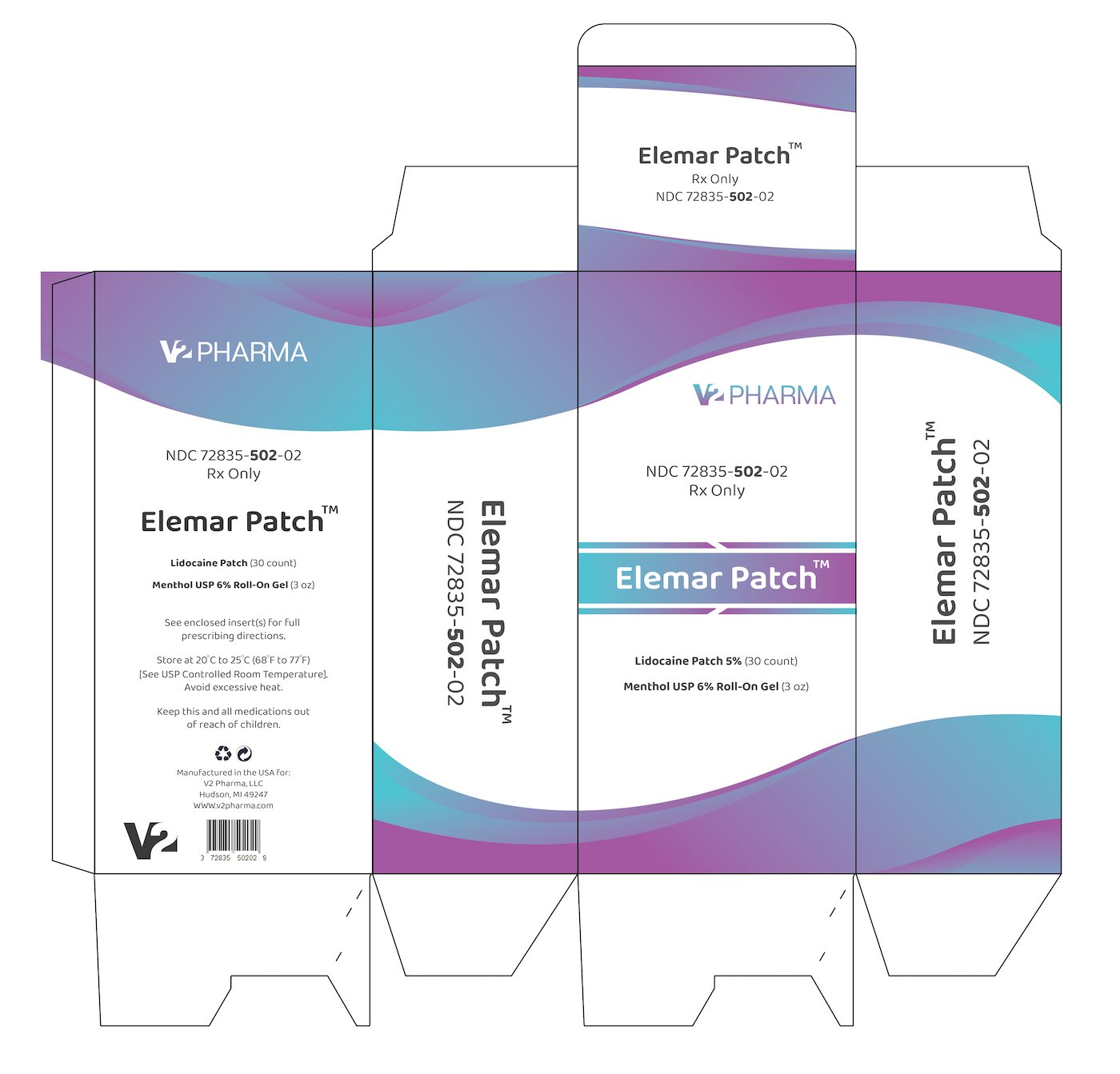
Carton of 30 patches, packaged into individual child-resistant envelopes.
Store at 20° to 25°C (68° to 77°F); excursions permitted between 15° to 30°C (59° to 86°F).
Drug Interactions
Antiarrhythmic Medications
Because the harmful effects of Elemar (lidocaine patch 5%) are cumulative and possibly synergistic, patients using Class I antiarrhythmic medications (such as tocainide and mexiletine) should use it with caution.
Local Anesthetics
The amount absorbed from all formulations must be taken into account when Elemar (lidocaine patch 5%) is used concurrently with other medications that contain local anesthetics.
Carcinogenesis, Mutagenesis, Impairment of Fertility
Carcinogenesis
It has been discovered that 2,6-xylidine, a small metabolite, causes cancer in rats. After applying a Elemar 5% lidocaine patch, there is very little of this metabolite in the blood.
Mutagenesis
Lidocaine HCl is not clastogenic in the chromosome aberration test using human cells or the mouse micronucleus test, nor is it mutagenic in the Salmonella/mammalian microsome test.
Fertility Impairment
There is no research on how Elemar 5% lidocaine patch affects fertility.
Pregnancy
Teratogenic Effects
Category B pregnancy.
There is no research on the Elemar 5% lidocaine patch during pregnancy. Lidocaine has been administered subcutaneously to rats at levels up to 30 mg/kg in reproduction studies, and no evidence of fetal damage has been found. However, there aren’t any sufficient, carefully monitored trials including expectant mothers. Lidocaine patch 5% should only be used during pregnancy if absolutely necessary because research on animal reproduction is not necessarily indicative of human response.
Labour And Delivery
There is no research on 5% lidocaine patches in labor and delivery. During labor and delivery, lidocaine is not contraindicated. The total dosages contributed by all formulations must be taken into account if Elemar (5% lidocaine patch) is used concurrently with other lidocaine-containing products.
Nursing Mothers
There is no research on Elemar (5% lidocaine patch) in breastfeeding moms. Human milk contains lidocaine, which has a milk:plasma ratio of 0.4. When giving a breastfeeding lady a 5% lidocaine patch, care should be used.
Elemar Patch – Clinical Pharmacology
Pharmacodynamics
By blocking the ionic fluxes necessary for impulse initiation and conduction, lidocaine, an amide-type local anesthetic, is thought to stabilize neuronal membranes.
After applying a Elemar 5% lidocaine patch, the quantity of lidocaine that penetrates intact skin is enough to cause an analgesic effect, but not enough to cause a full sensory block.
Pharmacokinetics
The duration of application and the surface area covered by the Elemar 5% lidocaine patch are directly correlated with the amount of lidocaine that is systemically absorbed. Three lidocaine patches were put over 420 cm2 of intact skin on the back of healthy volunteers for 12 hours as part of a pharmacokinetic investigation. Blood samples were taken during the application and 12 hours after the patches were removed in order to measure the concentration of lidocaine. Table 1 provides a summary of the findings.
Only 3 ± 2% of the dose administered is predicted to be absorbed when Elemar (lidocaine patch 5%) is used in accordance with the approved dosing guidelines. A utilized patch will contain at least 95% (665 mg) of lidocaine. About 1/10 of the therapeutic quantity needed to treat cardiac arrhythmias, or 0.13 mcg/mL, is the average peak blood concentration of lidocaine. The lidocaine concentration did not rise with daily usage, according to repeated application of three patches concurrently for 12 hours (the recommended maximum daily dose), once daily for three days. The 15 healthy individuals’ average plasma pharmacokinetic profile is displayed.
Distribution
When healthy volunteers receive intravenous lidocaine, the volume of distribution ranges from 0.7 to 2.7 L/kg (mean 1.5 ± 0.6 SD, n = 15). About 70% of lidocaine is bound to plasma proteins, mostly alpha-1-acid glycoprotein, at quantities generated by applying a Elemar 5% lidocaine patch. The plasma protein binding of lidocaine is concentration dependent at significantly higher plasma concentrations (1 to 4 mcg/mL of free base). Presumably through passive diffusion, lidocaine passes through the blood-brain and placental barriers.
Metabolism
The skin’s ability to metabolize lidocaine is unknown. The liver quickly breaks down lidocaine into many metabolites, such as glycinexylidide (GX) and monoethylglycinexylidide (MEGX), both of which have pharmacologic activity that is comparable to but less effective than lidocaine. 2,6-xylidine is a minor metabolite that causes cancer in rats but has no recognized pharmacologic effect. This metabolite’s blood levels is very low after using Elemar (5% lidocaine patch). MEGX and GX concentrations in serum range from 11% to 36% and from 5% to 11% of lidocaine concentrations, respectively, after intravenous treatment.
Excretion
The kidneys eliminate lidocaine and its metabolites. Less than 10% of lidocaine is eliminated unaltered. After IV injection, lidocaine is eliminated from plasma during a half-life of 81 to 149 minutes (mean 107 ± 22 SD, n = 15). Systemic clearance ranges from 0.33 to 0.90 L/min (mean 0.64 ± 0.18 SD, n = 15).
Clinical Studies
In a double-blind, crossover clinical research including 35 patients with post-herpetic neuralgia, single-dose treatment with Elemar (lidocaine patch 5%) was compared to treatment with vehicle patch (without lidocaine) and to no treatment (observation only). Over the course of 12 hours, pain intensity and pain alleviation scores were assessed on a regular basis. In terms of pain severity between 4 and 12 hours, the 5% lidocaine patch outperformed the vehicle patch statistically.
In a double-blind, crossover clinical trial of withdrawal-type design, 32 patients who were deemed responders to the open-label use of lidocaine patch 5% prior to the study were given multiple-dose, two-week treatment with lidocaine patch 5% versus vehicle patch (without lidocaine). The pain brought on by sensory stimuli (dysesthesia) was not assessed, but the continuous kind of pain was. Time to leave the experiment (14 versus 3.8 days at p-value <0.001), daily average pain relief, and patient treatment preference all showed statistically significant differences preferring lidocaine patch 5%. Additionally, around half of the patients used oral medications that are frequently used to treat post-herpetic neuralgia. In both therapy groups, concurrent medication use was comparable.