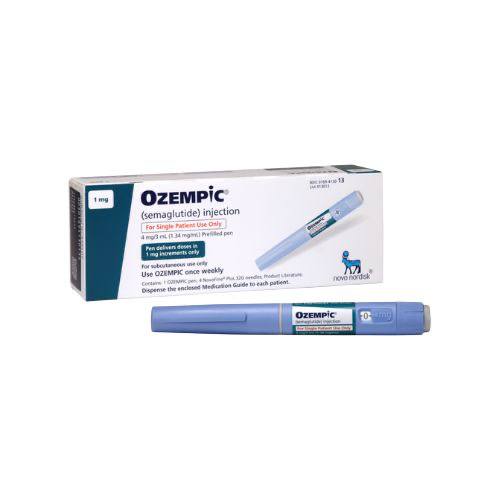
What is Ozempic
Ozempic (semaglutide) is a prescription GLP-1 receptor agonist used for type 2 diabetes in adults to improve blood sugar levels when used together with diet and exercise. In some adult diabetic individuals, ozempic is also used to lower the risk of cardiovascular disease and worsening kidney disease.
Ozempic functions by imitating the hormone GLP-1 that your body releases following a meal. It increases insulin release when blood sugar is elevated, decreases glucagon so your liver releases less glucose into the bloodstream, slows stomach emptying so you stay fuller longer, and helps you feel less hungry.
A prefilled autoinjector pen can be used to self-administer the once-weekly subcutaneous (under the skin) Ozempic injection. You take the Ozempic pill once a day, as soon as you get up, and at least half an hour before you eat or drink anything.
Although Ozempic (semaglutide) is not FDA-approved for weight loss (unlike Wegovy), it has been demonstrated in clinical trials to aid in and sustain weight loss when paired with diet and exercise.
The active component of Novo Nordisk’s Ozempic (injection, tablet), Rybelsus (tablet), and Wegovy (injection, tablet) is semaglutide. Every product has certain FDA-approved indications. The semaglutide compositions of Ozempic and Rybelsus tablets differ, and the dosages are not the same.
What Is The Use Of Ozempic
Ozempic tablets and injections are FDA-approved in adults for:
- Type 2 diabetes to improve blood sugar control
- Reducing the risk of a major cardiovascular event (such as a heart attack, stroke, or death) in type 2 diabetic patients who are at high risk for these events.
Ozempic injection is also FDA approved in adults for:
- Reducing the risk of kidney function decline, kidney failure, and cardiovascular death in patients with type 2 diabetes and chronic kidney disease (CKD).
Ozempic Side Effects
Common Ozempic side effects
Constipation, nausea, vomiting, decreased appetite, diarrhea, and abdominal discomfort are common Ozempic adverse effects that affect at least 5% of patients.
Serious Ozempic side effects
Ozempic contains a boxed warning about thyroid C-cell tumor risk. The FDA’s strongest safety-related notice is a boxed warning.
In addition to increasing the danger of food or liquid entering into your lungs during surgery or a medical treatment, Ozempic can cause major adverse effects include pancreatic inflammation, changes in eyesight, low blood sugar, kidney difficulties, and severe allergic responses. For more information on these dangerous side effects and the possibility of thyroid C-cell tumors, see the warning section.
If you have symptoms of an allergic response, such as hives, itching, dizziness, fast heartbeats, breathing difficulties, or swelling of your face, lips, tongue, or throat, get emergency medical attention.
Other severe adverse effects are possible with this medication. Make an immediate call to a physician if you have:
- Vision Changes
- Pounding Heartbeats or Fluttering in your Chest
- A light-headed feeling, like you might pass out
- Signs of a Thyroid Tumor – swelling or a Lump in your Neck, Trouble Swallowing, a Hoarse
- Voice, Feeling Short of Breath
- Symptoms Of Pancreatitis – severe Pain in your Upper Stomach spreading to your back, nausea with or without vomiting, Fast Heart Rate
- Gallbladder problems – Upper stomach pain, fever, clay-colored stools, Jaundice (yellowing of the skin or eyes)
- Low blood sugar – headache, hunger, weakness, sweating, confusion, irritability, dizziness, fast heart rate, or feeling jittery
- Kidney problems – swelling, urinating less, blood in urine, feeling tired or short of breath
stomach flu symptoms – stomach cramps, vomiting, loss of appetite, diarrhea (may be watery or bloody) - Symptoms of stomach paralysis (ileus) – bloating, stomach cramps or pain, nausea or vomiting, constipation or diarrhea, loss of appetite.
- Food or liquid getting into the lungs during surgery or other procedures that require anesthesia or deep sedation. Ozempic may increase the chance of food getting into your lungs during surgery or other procedures. Tell all your healthcare providers that you are taking this medicine before you are scheduled to have surgery or other procedures.
Tips For Managing Ozempic Side Effects
Following these tips may help you manage stomach side effects:
- Eat more slowly
- Consume smaller meals
- Select more bland, low-fat foods (like crackers, toast, and rice)
- Avoid greasy, fried foods or sugar treats
- Eat foods that contain water (like soup or gelatin)
- Don’t lie down right after eating
- Drink clear or ice-cold liquids
- If possible, go outside for fresh air if you feel sick to your stomach.
Before Taking This Medicine
You should not use this medicine if you are allergic to semaglutide or any other ingredients in this medicine, or if you have:
Multiple endocrine neoplasia type 2 (tumors in your glands); or
A personal or family history of medullary thyroid carcinoma (a type of thyroid cancer).
To make sure this medicine is safe for you, tell your doctor if you:
- Have a stomach or intestinal disorder
- Have severe problems with your stomach, such as slowed emptying of your stomach (gastroparesis) or problems with digesting food
- Have or have had pancreas problems (pancreatitis)
- Are planning surgery or other procedure that requires anesthesia or deep sedation
- Have kidney disease
- Have eye problems caused by diabetes (retinopathy)
- Are pregnant or intending to become pregnant
- Are breastfeeding or intending to breastfeed.
In animal experiments, this medication resulted in thyroid cancer or tumors. Whether these consequences might manifest in humans is unknown. Discuss your risk with your physician.
Additionally, before using Ozempic, discuss any potential adverse effects with your healthcare provider.
Pregnancy
Ozempic’s potential to damage an unborn child is unknown. It is advised that you cease taking this medication at least two months prior to becoming pregnant, therefore see your doctor before getting pregnant. Inform your doctor as soon as possible if you do become pregnant while taking semaglutide.
By encouraging weight loss and improved blood sugar regulation, semaglutide may indirectly boost fertility (see Ozempic babies: Does Ozempic promote fertility?).
If you intend to become pregnant or are already pregnant, discuss with your healthcare practitioner the best strategy to manage your blood sugar.
Breastfeeding
It is not known if Ozempic passes into your breast milk. You should talk with your healthcare provider about the best way to feed your baby while using this medicine.
How Should I Use This Medicine
Ozempic Injection Instructions
You should carefully read the Instructions for Use and ask your doctor or pharmacist to clarify anything you don’t understand. It’s crucial to take this medication exactly as prescribed. Never take more or less of it or more frequently than your doctor recommends.
Ozempic injection is a pre-filled pen injected under the skin (subcutaneously).
- Ozempic is usually given 1 time a week
- It can be given with or without meals at any time of the day
- It may be injected under the skin of the thigh, abdomen, or upper arm.
- You should rotate the injection site for each dose.
- If using Ozempic with insulin, you may give insulin in the same area, but they should not be given right next to each other. Do not mix insulin and Ozempic in the same injection.
The day of weekly administration can be changed if necessary, as long as the time between two doses is at least 2 days (>48 hours).
Ozempic Pill Instructions
- Take Ozempic tablets once a day.
- Take the tablet when you first wake up and at least 30 minutes before you eat or drink anything.
- Take the tablet with a small amount of water (no more than 4 ounces, or 120ml ).
- Swallow the tablet whole and do not crush, chew, or break it.
- After 30 minutes of taking the tablet, you may eat, drink, or take other oral medicines.
Read all medication guides or instruction sheets and adhere to the instructions on your prescription label to take medications exactly as directed by your doctor.
Typically, this medication is started at a low dose and progressively increased every four to thirty days. Pay close attention to your doctor’s dosage recommendations.
What Happens If I Miss A Dose
Give Ozempic as soon as you can within five days of missing a dose. Skip the missed dose and give the subsequent dose on the regularly scheduled day if more than five days have elapsed. Patients can then return to their usual once-weekly medication regimen in each scenario.
What Happens If I Overdose
If you take too much Ozempic, call your healthcare provider or Poison Help line or go to the nearest hospital emergency room right away.
Ozempic Dosing Information
Ozempic Injection Dosing Information
Ozempic injection is given as a once-weekly injection under the skin (subcutaneous injection), using an autoinjector (pen).
Ozempic should be started at a low dose to reduce the risk of gastrointestinal side effects.
Ozempic Injection Dose for Blood Sugar Control
- Weeks 1 through 4: 0.25 mg dose 1 time a week.
- Weeks 5 through 8: 0.5 mg dose 1 time a week.
- If additional glycemic control is needed, increase the dosage to 1 mg once weekly after at least 4 weeks on the 0.5 mg dose.
- If additional glycemic control is needed, increase the dosage to 2 mg once weekly after at least 4 weeks on the 1 mg dosage.
- Usual maintenance dose: 0.5 mg, 1mg or 2 mg injected one time a week.
- Maximum dosage: Do not exceed 2 mg injected one time a week.
Ozempic injection dose for Type 2 Diabetes Mellitus and Chronic Kidney Disease
- Weeks 1 through 4: 0.25 mg dose 1 time a week.
- Weeks 5 through 8: 0.5 mg dose 1 time a week.
- Week 9 onward: Increase the dosage to 1 mg once weekly after at least 4 weeks on the 0.5 mg dosage.
Ozempic pen strengths
Ozempic is available in 3 strength options:
- 0.25 mg or 0.5 mg dose pen (4 doses of 0.25 mg and 2 doses of 0.5 mg, or 4 doses of 0.5 mg)
- 1 mg dose pen (4 doses per pen)
- 2 mg dose pen (4 doses per pen)
Each Ozempic pen carton contains 4 NovoFine Plus needles with 1mg and 2mg pens and 6 NovoFine Plus needles with the 0.25/0.5mg dose pen.
Each injection is pre-filled and intended to be used by one patient only, even if the needle is changed.
Ozempic Pill Dosing Information
Starting Ozempic Dosage (Initiation phase):
- Days 1 through 30: 1.5 mg orally once daily (this dose is not effective for glycemic control).
Escalation and Maintenance Ozempic Dosage:
- Days 31 to 60: 4 mg orally once daily.
- Day 61 or thereafter if:
- If no additional glycemic control is needed, then maintain the dosage at 4 mg orally once daily.
- If additional glycemic control is needed, then increase the dosage to 9 mg orally once daily
Switching from Ozempic Injection to Ozempic Tablets
From the Ozempic injection 0.5 mg dose, may switch to Ozempic tablets.
- One week after discontinuing Ozempic 0.5mg injection, start taking 4 mg or 9 mg of Ozempic tablets orally once daily
Ozempic Pill Formulations
Ozempic pill is available as 1.5 mg, 4 mg, and 9 mg.
Storage
Ozempic Pen Storage
Unopened Ozempic Pens
- Store unopened injection pens in the original carton in a refrigerator between 36ºF to 46ºF (2ºC to 8ºC).
- Do not freeze. Discard any medicine that has been frozen.
- Do not use past the expiration date.
After first use
- The Ozempic injection pen contains multiple doses.
- After your first use, store the pen with the needle removed in a refrigerator or at room temperature.
- Protect from heat and light.
- Keep the cap on when you are not using it. T
- Discard pen 56 days after first opening it.
- Do not reuse a needle. Place it in a puncture-proof “sharps” container and dispose of it following state or local laws. Keep out of the reach of children and pets.
Ozempic Tablet Storage
- Store at room temperature between 68°F and 77°F (20°C to 25°C).
- Store in a dry place away from moisture.
- Store tablets in the original closed bottle until you are ready to take one. Do not store in any other container.
- Keep all medicines out of the reach of children.