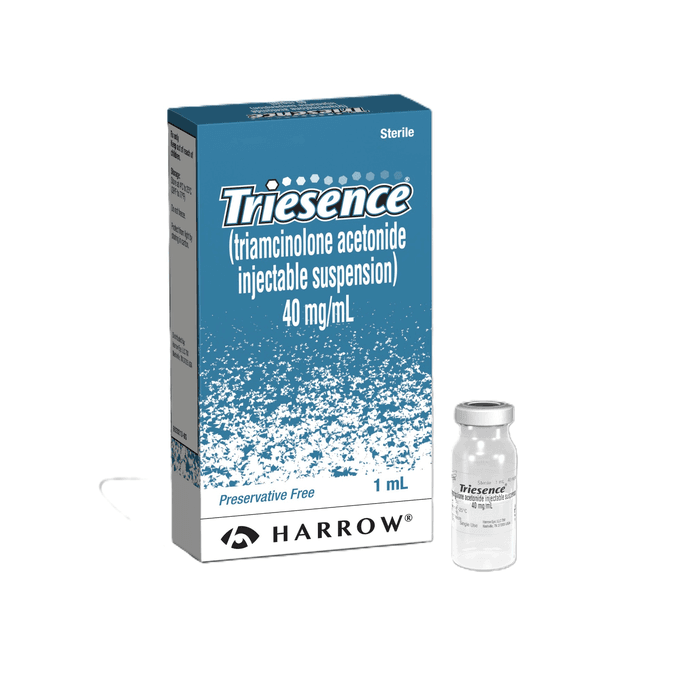
What Is Triesence
TRIESENCE (triamcinolone acetonide injectable suspension) 40 mg/mL is a synthetic corticosteroid with anti-inflammatory action. Each mL of the sterile, aqueous suspension provides 40 mg of triamcinolone acetonide, with sodium chloride for isotonicity, 0.5% (w/v) carboxymethylcellulose sodium and 0.015% polysorbate 80. It also contains calcium chloride (dihydrate), magnesium chloride (hexahydrate), potassium chloride, sodium acetate (trihydrate), sodium citrate (dihydrate) and water for injection. Sodium hydroxide and hydrochloric acid may be present to adjust pH to a target value 6 – 7.5.
The chemical name for triamcinolone acetonide is 9-Fluro- 11β, 16α, 17,21-tetrahydroxypregna-1,4-diene-3,20-dione cyclic 16,17- acetal with acetone.
Triamcinolone is a corticosteroid found in Triesence. It stops the body from releasing chemicals that lead to inflammation.
To treat inflammation brought on by illness or trauma, triesence is injected into the eye. It is typically administered following the failure of steroid eye drops to alleviate symptoms.
Triesence is also utilized in vitrectomy, a particular kind of eye surgery.
WARNINGS
If you have a fungal infection anyplace on your body or are allergic to triamcinolone, you should not use Triesence. If you are pregnant, let your doctor know before using Triesence. It might be harmful to the fetus. Use birth control that works, and let your doctor know if you get pregnant while receiving therapy.
Inform your doctor of any bacterial, fungal, or viral infection (including tuberculosis) prior to starting Triesence. Additionally, let your doctor know if you have any of the following conditions: diabetes, high blood pressure, congestive heart failure, thyroid issues, myasthenia gravis, stomach or intestinal disorders, cataracts or glaucoma, herpes infection of the eye, or a history of a recent heart attack.
Consult the physician administering your Triesence treatment before receiving any vaccinations. Certain vaccines might not be as effective or might have negative side effects when used in conjunction with steroid medication.
Steroids can reduce the number of blood cells that aid in the body’s defense against infections. Stay away from sick or infected persons. If you have been exposed to measles or chicken pox, call your doctor for preventive care.
Triesence may interact with numerous other medications. Inform your physician about all the prescription and over-the-counter drugs you take. Make a list of all the medications you take, and present it to any physician or other healthcare professional who treats you.
Prior To Using This Medication
If you have a fungal infection anyplace in your body or are allergic to triamcinolone, you should not take Triesence.
Tell your doctor if you have ever had:
- Any type of bacterial, fungal, or viral infection
- A parasite infection
- Tuberculosis
- Herpes infection of your eye
- Cataracts or glaucoma
- A thyroid disorder
- High blood pressure, heart failure, or heart attack
- Diabetes
- Osteoporosis, or low bone mineral density
- Diverticulitis, stomach or intestinal ulcer, or stomach surgery; or
- A muscle disorder such as myasthenia gravis.
If you are pregnant, avoid using Triesence. Birth problems or injury to the fetus could result from it. While using this medication, avoid getting pregnant by using an effective birth control method.
Breastfeeding a baby while using this medication might not be safe. Find out about any hazards from your physician.
How Is Triesence Given
A medical specialist will inject Triesence into your eye in a clinical setting. Before administering the injection, the doctor will numb your eye with a medication.
You will be closely monitored for any edema, irritation, or elevated intraocular pressure following the Triesence injection.
Regular medical examinations and eye exams will be necessary.
You might need to take potassium supplements and limit your salt intake, according to your doctor. Observe the advice of your physician.
Your immune system may be impacted by steroid medication. You can be more susceptible to illnesses. Additionally, steroids might impede the healing of cuts on the skin. To avoid getting sick, infected, or hurt, use caution.
Dosing Information
Usual Adult Dose of Triesence for Uveitis:
4 mg (100 microliters of 40 mg/mL suspension) with subsequent dosage as needed over the course of treatment
Comments:
-Strict aseptic technique is mandatory.
-The vial should be vigorously shaken for 10 seconds before use.
-Prior to withdrawal, the suspension should be inspected for clumping or granular appearance (agglomeration).
-After withdrawal, the suspension should be injected without delay.
-Careful technique should be employed to avoid the possibility of entering a blood vessel or introducing organisms that can cause infection.
Uses:
-Treatment of sympathetic ophthalmia
-Treatment of temporal arteritis
-Treatment of uveitis
-Treatment of ocular inflammatory conditions unresponsive to topical
Usual Adult Dose of Triesence for Temporal Arteritis:
4 mg (100 microliters of 40 mg/mL suspension) with subsequent dosage as needed over the course of treatment
Comments:
-Strict aseptic technique is mandatory.
-The vial should be vigorously shaken for 10 seconds before use.
-Prior to withdrawal, the suspension should be inspected for clumping or granular appearance (agglomeration).
-After withdrawal, the suspension should be injected without delay.
-Careful technique should be employed to avoid the possibility of entering a blood vessel or introducing organisms that can cause infection.
Uses:
-Treatment of sympathetic ophthalmia
-Treatment of temporal arteritis
-Treatment of uveitis
-Treatment of ocular inflammatory conditions unresponsive to topical
Usual Adult Dose of Triesence for Vitrectomy:
1 to 4 mg (25 to 100 microliters of 40 mg/mL suspension) administered intravitreally
Comments:
-Strict aseptic technique is mandatory.
-The vial should be vigorously shaken for 10 seconds before use.
-Prior to withdrawal, the suspension should be inspected for clumping or granular appearance (agglomeration).
-After withdrawal, the suspension should be injected without delay.
-Careful technique should be employed to avoid the possibility of entering a blood vessel or introducing organisms that can cause infection.
Use: Visualization during vitrectomy
What Happens If I Miss A Dose
Call your doctor for instructions if you miss an appointment for your injection.
What Happens If I Overdose
An overdose is uncommon because this medication is administered by a medical specialist in a medical setting.
What Should I Avoid While Receiving Triesence
Stay away from sick or infected persons. If you have been exposed to measles or chickenpox, call your doctor for preventive care. For those who use steroid medications, these diseases may be deadly or extremely dangerous.
When taking Triesence, avoid getting a smallpox vaccine or any other “live” vaccine. You could not be completely protected from illness by the vaccine, and it might not function as efficiently. Measles, mumps, rubella (MMR), polio, rotavirus, typhoid, yellow fever, varicella (chickenpox), and zoster (shingles) are among the live vaccines.
Side Effects Of Triesence
Get emergency medical help if you have signs of an allergic reaction to Triesence: hives; difficulty breathing; swelling of your face, lips, tongue, or throat.
Call your doctor at once if you have:
- Signs of eye infection – swelling, redness, severe discomfort, crusting or drainage
- Blurred vision, tunnel vision, eye pain, or seeing halos around lights
- Unusual changes in mood or behavior
- Swelling, rapid weight gain, feeling short of breath
- Muscle pain or weakness
- Large red or purple spots on your skin
- Any wound that will not heal
- Increased thirst or urination
- Severe stomach pain, bloody or tarry stools, coughing up blood or vomit that looks like coffee grounds
- Low potassium – leg cramps, constipation, irregular heartbeats, fluttering in your chest, numbness or tingling, limp feeling; or
- Signs of low adrenal gland hormones – flu-like symptoms, headache, weakness, tiredness, diarrhea, vomiting, craving salty foods, and feeling light-headed.
Triamcinolone can affect growth in children. Tell your doctor if your child is not growing at a normal rate while receiving this medicine.
Common Triesence side effects may include:
- Blurred vision; or
- Increased appetite.
How Will Triesence Be Affected By Other Drugs
Certain drugs should not always be taken together. Certain prescriptions have the potential to alter the blood levels of other medications you take, which could worsen side effects or reduce their efficacy.
Inform your doctor about every medication you now take. Triamcinolone can be affected by a number of medications, particularly:
- A diuretic or “water pill”
- Insulin or oral diabetes medicine
- Birth control pills or hormone replacement therapy
- Medicine to treat any type of infection
- A blood thinner – warfarin, Coumadin, Jantoven; or
- NSAIDs (nonsteroidal anti-inflammatory drugs) – aspirin, ibuprofen (Advil, Motrin), naproxen (Aleve), celecoxib, diclofenac, indomethacin, meloxicam, and others.
Many additional medications may interact with triamcinolone; this list is not exhaustive. This covers vitamins, herbal goods, and both prescription and over-the-counter medications. This list does not include every potential drug interaction.
Further Information
You can learn more about Triesence from your physician.
Never share your medications with others, keep this and all other medications out of children’s reach, and only use Triesence as directed.
To make sure the information on this page pertains to your specific situation, always speak with your healthcare professional.
Medical Disclaimer
Although every attempt has been taken to assure that the material is correct, current, and comprehensive, there is no assurance to that effect. Furthermore, the drug information in this document may be time-sensitive and should not be used as a reference beyond this date. This content does not recommend therapy, diagnose patients, or endorse medications. The expertise, skill, knowledge, and judgment of healthcare professionals in patient care are intended to be supplemented, not replaced, by this reference material. A drug’s safety, efficacy, or suitability for a particular patient should never be inferred from the lack of a warning for that medication or combination of medications.
Puremedz disclaims any liability for any part of healthcare provided using the supplied materials. All potential applications, instructions, cautions, warnings, drug interactions, allergic reactions, and negative effects are not covered by the information provided here. Consult your physician, nurse, or pharmacist if you have any questions regarding the drugs you are taking.
Medical papers’ statistical statistics provide broad trends rather than specific recommendations. For your particular healthcare decisions, always seek individualized medical advice because individual factors can differ greatly.