What Is Agamree
Agamree (vamorolone) is a novel corticosteroid used to treat Duchenne muscular dystrophy (DMD) to help improve motor function. Agamree works through its anti-inflammatory and immunosuppressive effects, which help slow muscle damage. As well as improving motor function, Agamree also has potentially fewer side effects on bone health, growth rate, and behavior.
Agamree is a once daily oral suspension.
Agamree mechanism of action is through the glucocorticoid receptor, which has anti-inflammatory and immunosuppressive effects. Although its precise mechanism of action is still unknown, Amgaree is thought to work through NF-κB inhibition, novel membrane-stabilizing effect, and immunological properties.
One corticosteroid is agamree (vamorolone). For patients two years of age and older with Duchenne muscular dystrophy (DMD), it has FDA approval. The drug relieves mobility issues and muscle weakness brought on by this hereditary disorder. You take the liquid drug Agamree (vamorolone) orally, usually once a day. Your weight determines the precise dosage you need. Mood swings, difficulty falling asleep, and increased appetite are a few possible adverse effects.
Uses and Indications for Agamree
AGAMREE is indicated for the treatment of Duchenne muscular dystrophy (DMD) in patients 2 years of age and older.
Dosage & Administration Of Agamree
Evaluations Before the First AGAMREE Dose
Before beginning Agamree, administer all vaccinations in accordance with immunization guidelines. Give live or live-attenuated immunizations at least four to six weeks before beginning Agamree
Information on Dosage
Agamree should be taken orally once daily at a dose of 6 mg/kg, ideally with a meal. Patients who weigh more than 50 kg may take up to 300 mg per day.
A daily dose of 2 mg/kg may be effective for certain people. Depending on each person’s tolerance, doses may be lowered to 2 mg/kg/day as needed.
Recommended Dosage for Hepatic Impairment
For patients with mild (Child-Pugh A) to moderate (Child-Pugh B) hepatic impairment, the recommended dosage of Agamree is 2 mg/kg taken orally once daily, preferably with a meal; for patients weighing more than 50 kg, the maximum daily dosage is 100 mg [see Use in Specific Populations (8.6) and Clinical Pharmacology (12.3)].
Doses may be titrated down based on individual tolerability.
Important Preparation and Administration Instructions
Shake Agamree oral suspension well for about 30 seconds before administration.
Use only the oral syringe provided with the product. After withdrawing the appropriate dose into the oral syringe, dispense directly into the mouth.
Discard any unused Agamree oral suspension remaining after 3 months of first opening the bottle.
Switching from Corticosteroid Treatment to AGAMREE
To reduce the risk of adrenal insufficiency, patients can transition from oral corticosteroid treatment (such as prednisone or deflazacort) to Agamree without stopping their medication or lowering their previous corticosteroid dosage.
Agamree should be started at a dose of 6 mg/kg/day for patients who are switching from long-term oral corticosteroid therapy.
Dosage Modification for Use with Strong CYP3A4 Inhibitors
When using powerful CYP3A4 inhibitors, the suggested dosage of Agamree is 4 mg/kg taken orally once daily, ideally with a meal; patients weighing more than 50 kg may take up to 200 mg daily.
Doses may be titrated down based on individual tolerability.
Discontinuation
If Agamree has been used for more than a week, the dosage needs to be progressively reduced.
Strengths And Dosage Forms
Oral Suspension: 40 mg/mL orange flavored white to off-white suspension
Contraindications
Patients who have a history of vamorolone or any of agamree’s inactive ingredient sensitivities should not use AGAMREE. Patients on corticosteroid medication have experienced hypersensitivity episodes, including anaphylaxis.
Cautions And Warnings
Alterations in Endocrine Function
Particularly when used chronically, corticosteroids like Agamree can seriously and potentially fatally disrupt endocrine function. After stopping Agamree, keep an eye out for Cushing’s syndrome, hyperglycemia, and adrenal insufficiency in patients. Adverse endocrine events may also be more common in people with pheochromocytoma, primary adrenal insufficiency or congenital adrenal hyperplasia, hypopituitarism, or impaired thyroid function.
Adrenal Insufficiency Risk After Withdrawal
Reversible suppression of the hypothalamic-pituitary-adrenal (HPA) axis is produced by Agamree, and discontinuation may result in secondary adrenal insufficiency. If Agamree is stopped suddenly, acute adrenal insufficiency may result, which could be lethal. Depending on the dosage and length of treatment, patients may experience varying degrees and durations of adrenocortical insufficiency.
When stopping medication, lowering the dosage gradually lowers the risk of adrenal insufficiency. However, the insufficiency may continue for months after stopping long-term medication; hence, systemic corticosteroid supplementation is advised if stress arises during such time. Patients who currently use corticosteroids may need to increase their dosage under stressful situations.
Abrupt cessation of corticosteroids may also result in a steroid “withdrawal syndrome,” which appears to be independent to adrenocortical insufficiency. Anorexia, nausea, vomiting, lethargy, headache, fever, joint discomfort, desquamation, myalgia, and/or weight loss are some of the symptoms of this syndrome. Instead of overly low corticosteroid levels, these symptoms are believed to be caused by the abrupt shift in corticosteroid concentration.
The Cushing Syndrome
Long-term exposure to exogenous corticosteroids, such as Agamree, can cause Cushing’s syndrome (hypercortisolism), which manifests as hypertension, truncal obesity and limb thinning, purple striae, facial rounding and plethora, muscle weakness, easy and frequent bruising with thin, fragile skin, posterior neck fat deposition, osteopenia, acne, amenorrhea, hirsutism, and mental abnormalities.
Hyperglycemia
Corticosteroids have the potential to raise blood sugar, exacerbate pre-existing diabetes, increase the risk of diabetes mellitus in patients receiving long-term treatment, and lessen the effects of anti-diabetic medications.
Patients receiving Agamree should have their blood glucose levels checked on a regular basis. Anti-diabetic medication should be started or modified appropriately for patients with hyperglycemia.
Considerations for Use in Patients with Altered Thyroid Function
Patients with hypothyroidism have lower metabolic clearance of corticosteroids, while those with hyperthyroidism have higher metabolic clearance. A corticosteroid dose modification may be required if the patient’s thyroid condition changes. To lower the risk of adrenal crisis when concurrent administration of Agamree and levothyroxine is necessary, Agamree should be administered before starting levothyroxine medication.
Pheochromocytoma Crisis
Following the injection of systemic corticosteroids, there have been cases of pheochromocytoma crises, which can be fatal. Before giving corticosteroids to patients with suspected or confirmed pheochromocytoma, take into account the possibility of a pheochromocytoma crisis.
Immunosuppression And Elevated Infection Risk
This medication and other corticosteroids weaken the immune system and raise the chance of contracting any disease, including bacterial, fungal, viral, protozoan, or helminthic infections.
Corticosteroids can:
- Reduce resistance to new infections
- Exacerbate existing infections
- Increase the risk of disseminated infections
- Increase the risk of reactivation or exacerbation of latent infections
- Mask some signs of infection
Infections linked to corticosteroids can range from mild to severe and occasionally deadly. As corticosteroid dosages rise, so does the incidence of infection problems.
Keep an eye out for the emergence of illness and, if necessary, think about stopping the medicine or lowering the dosage.
Tuberculosis
Reactivation of tuberculosis may happen if individuals with latent tuberculosis or tuberculin reactivity are treated with this medicine. Keep a close eye out for reactivation in these patients. Patients with latent tuberculosis or tuberculin reactivity should get chemoprophylaxis during extended therapy.
Varicella Zoster and Measles Viral Infections
Varicella and measles can have a serious or even fatal course in non-immune patients taking corticosteroids, including Agamree. In corticosteroid-treated patients who have not had these diseases or are non-immune, particular care should be taken to avoid exposure to varicella and measles.
- Varicella zoster immunoglobulin prophylaxis may be necessary if a patient receiving this medication is exposed to varicella. Antiviral therapy may be taken into consideration if varicella manifests.
- Immunoglobulin prophylaxis may be necessary if a patient receiving this medication is exposed to measles.
Hepatitis B Virus Reactivation
Patients who are hepatitis B carriers using immunosuppressive dosages of corticosteroids, such as this medication, may have hepatitis B viral reactivation. Patients on corticosteroids who seem to have recovered from their hepatitis B infection may also occasionally experience reactivation.
Before starting immunosuppressive (such as extended) treatment with this medication, patients should be screened for hepatitis B infection. It is advised that people who exhibit signs of hepatitis B infection speak with doctors who specialize in treating the illness about monitoring and the possibility of receiving hepatitis B antiviral medication.
Fungal Infections
Use of corticosteroids, such as this medicine, should be avoided when systemic fungal infections are present unless the medicine is required to manage adverse medication responses. This medication discontinuation or dosage decrease is advised for patients receiving long-term Agamree medication who experience systemic fungal infections.
Amebiasis
Latent amebiasis may be activated by corticosteroids, such as this medication. Therefore, before starting this medicine in patients who have spent time in the tropics or who have unexplained diarrhea, it is advised that latent or active amebiasis be ruled out.
Strongyloides Infestation
Patients with a known or suspected Strongyloides (threadworm) infestation should utilize corticosteroids, such as Agamree, with extreme caution. Strongyloides hyperinfection and dissemination with broad larval migration may result from corticosteroid-induced immunosuppression in these patients. This is frequently followed by severe enterocolitis and potentially fatal gram-negative septicemia.
Cerebral Malaria
Patients with cerebral malaria should not use corticosteroids, such as this medication.
Changes In Renal And Cardiovascular Function
This medication and other corticosteroids can raise blood pressure, increase the excretion of potassium and calcium, and cause salt and water retention.
Keep an eye on your blood pressure and look for any indications of volume overload. Keep an eye on your serum potassium levels.
Patients with renal insufficiency, hypertension, or congestive heart failure should use this medication with caution. Since corticosteroid use has been linked to left free wall rupture following a recent myocardial infarction, This medication should be administered to these patients with extreme caution.
Gastrointestinal Perforation
Patients with certain gastrointestinal conditions, such as active or latent peptic ulcers, diverticulitis, fresh intestinal anastomoses, and non-specific ulcerative colitis, are at higher risk of gastrointestinal perforation when using corticosteroids. Patients on corticosteroids may conceal symptoms of gastrointestinal perforation, such as peritoneal discomfort.
Steer clear of this medicine if there is a chance of developing diverticulitis, fresh intestinal anastomoses, current or latent peptic ulcers, perforation, abscess, or other pyogenic infections.
Mood And Behavioral Issues
Systemic corticosteroids, such as this medication, may cause potentially serious psychological side effects. After beginning medication, symptoms usually appear a few days or weeks later and may be dose-related. Pharmacologic treatment may be required, however these reactions may improve with dose reduction or cessation.
21% of patients on this medicine, 6 mg/kg, 10% of patients on the medication, 2 mg/kg, and 14% of patients on placebo experienced mental adverse events in Study 1. Agamree-reported psychiatric adverse effects went away without the need for therapy or stopping the medication.
Adults who experience psychiatric adverse responses to corticosteroids typically experience depressive episodes following treatment termination and hypomanic or manic symptoms (such as euphoria, sleeplessness, and mood swings) during treatment. Psychiatric adverse responses in children on corticosteroids typically include sleep disorders and hyperactivity symptoms (such as irritability, aggressive conduct, increased frequency of tantrums, and mood swings). Patients or caregivers should be made aware of the possibility of behavioral and mood changes, and they should be encouraged to seek medical help if psychiatric symptoms appear, particularly if suicidal thoughts or depression are suspected.
Effects On Bones
Decreased Bone Mineral Density
Through its effects on calcium regulation (i.e., decreasing absorption and increasing excretion) and inhibition of osteoblast function, corticosteroids like Agamree reduce bone formation and accelerate bone resorption. Inhibition of bone growth in juvenile patients and the development of bone loss at any age may result from this, along with a decrease in the protein matrix of the bone due to an increase in protein catabolism and decreased sex hormone synthesis. Patients who have lost bone may be more vulnerable to long bone and vertebral fractures.
Before starting corticosteroid therapy, take into account the patient’s osteoporosis risk. Patients receiving long-term Agamree treatment should have their bone mineral density monitored.
Avascular Necrosis
Avascular necrosis may be brought on by corticosteroids.
Ophthalmic Effects
Corticosteroids, like this medication, have the potential to cause posterior subcapsular cataracts. In addition to increasing the risk of secondary ocular infections brought on by bacteria, fungi, or viruses, corticosteroids may also result in glaucoma with potential harm to the optic nerves. Patients with active ocular herpes simplex should not use corticosteroids. Some people receiving corticosteroids may experience an increase in intraocular pressure. Keep an eye on intraocular pressure if this medication is continued for longer than six weeks.
Immunizations
Before beginning this medication, administer all vaccinations in accordance with immunization guidelines. Give live or live-attenuated immunizations at least four to six weeks before beginning the medication. Concurrent vaccinations are permitted for patients on this medicine, with the exception of live or live-attenuated vaccines.
Impacts On Development And Growth
Children’s growth and development may be negatively impacted by long-term usage of corticosteroids, such as this medication.
Myopathy
Acute myopathy may be more common in individuals with neuromuscular transmission abnormalities, such as myasthenia gravis, or in patients taking corticosteroids and concurrent therapy with neuromuscular blocking drugs, such as pancuronium. This acute myopathy is widespread, may affect the respiratory and ocular muscles, and may cause quadriparesis. After quitting corticosteroids, recovery or clinical improvement may take weeks to years.
Kaposi’s Sarcoma
Patients using corticosteroid therapy, usually for chronic illnesses, have been documented to develop Kaposi’s sarcoma. Kaposi’s sarcoma may improve clinically if corticosteroids are stopped.
Thromboembolic Events
Higher cumulative dosages of corticosteroids have been linked to an increased risk of thromboembolism, especially venous thromboembolism, according to observational studies. It’s unknown whether daily dosage or length of use affects risk. When administering this medication to individuals who may be at risk for thromboembolic illnesses, exercise caution.
Anaphylaxis
Patients on corticosteroid therapy have occasionally had anaphylaxis.
Side Effects And Adverse Reactions
The following serious adverse reactions are discussed in more detail in other sections:
- Alterations in Endocrine Function
- Immunosuppression and Increased Risk of Infection
- Alterations in Cardiovascular/Renal Function
- Gastrointestinal Perforation
- Behavioral and Mood Disturbances
- Effects on Bones
- Ophthalmic Effects
- Immunizations
- Effects on Growth and Development
- Myopathy
- Kaposi’s Sarcoma
- Thromboembolic Events
- Anaphylaxis
Experience With Clinical Trials
Adverse reaction rates found in a drug’s clinical trials cannot be directly compared to those found in another drug’s clinical trials since clinical trials are carried out under very different conditions, and they might not accurately represent rates seen in real-world situations.
Drug Interactions
Effect of Other Drugs on Vamorolone
Vamorolone exposure is increased when this medicine and itraconazole, a potent CYP3A4 inhibitor, are used together. When patients are using powerful CYP3A4 inhibitors concurrently, lower their medicine dosage. When this medication is taken concurrently with moderate or weak CYP3A4 inhibitors, no dosage modifications are necessary.
Excessive Dosage
Acute vamorolone overdose is treated with prompt supportive and symptomatic care. Emesis or gastric lavage may be taken into consideration.
Agamree Description
AGAMREE (vamorolone) oral suspension contains vamorolone, a corticosteroid. Vamorolone [17α,21-dihydroxy-16α-methyl-pregna-1,4,9(11)-triene-3,20-dione] is a white to off-white powder with a molecular formula of C 22H 28O 4and a molecular weight of 356.46 g/mol.
Vamorolone is sparingly soluble in ethanol and acetone but easily soluble in methanol and dioxane.
For oral use, AGAMREE is offered as a 40 mg/mL oral suspension. Vamorolone, citric acid (monohydrate), disodium phosphate, glycerin, hydrochloric acid (for pH adjustment), orange taste, sodium benzoate, sucralose, water, and xanthan gum are all inactive components of the oral suspension.
How Is Agamree Supplied
How Supplied
The oral suspension of this medication is an orange flavored homogeneous white to off-white suspension, containing 40 mg/mL of vamorolone.
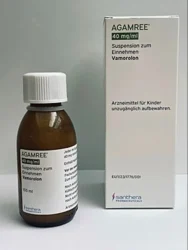
This medication is supplied as 100 mL in 125 mL glass bottle packaged with one bottle adapter, two 5 mL oral syringes, and an Instructions for Use.
Storage And Handling
Store the bottle upright at room temperature between 20°C to 25°C (68°F to 77°F). Excursions permitted between 15°C to 30°C (59°F to 86°F) in the original carton. See USP controlled room temperature.
After opening, store the bottle upright in a refrigerator 2°C to 8°C (36°F to 46°F). Do not freeze.
Discard any unused AGAMREE oral suspension remaining after 3 months of first opening the bottle.