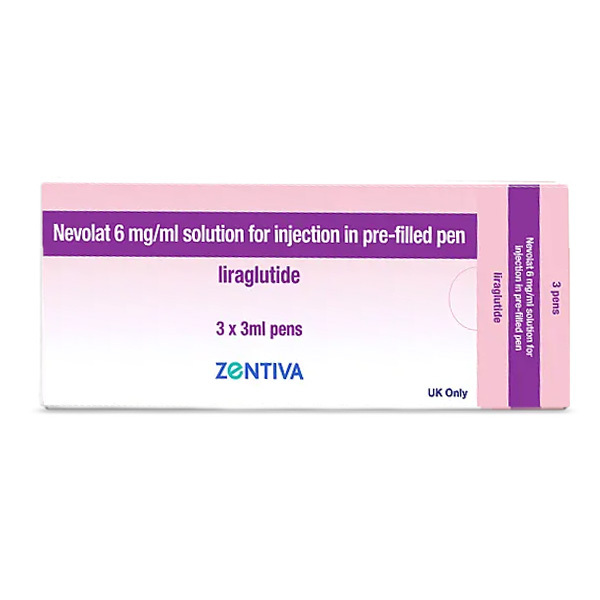
What Is Nevolat
The active ingredient in the weight-loss medication Nevolat is liraglutide. It is comparable to glucagon-like peptide-1 (GLP-1), a naturally occurring hormone that the intestine releases following a meal. This medicine acts on brain receptors that regulate hunger, making you feel less hungry and fuller. You might be able to eat less and lose weight as a result.
What Is Nevolat Used For
In addition to diet and exercise, it is used to help persons 18 years of age and older who have:
- A BMI of 30 kg/m2 or greater (obesity) or
- A BMI of 27 kg/m2 and less than 30 kg/m2 (overweight) and weight-related health problems (such as diabetes, high blood pressure, abnormal levels of fats in the blood or breathing problems during sleep called obstructive sleep apnoea).
BMI (Body Mass Index) is a measure of your weight in relation to your height.
After 12 weeks on the 3.0 mg/day dose, you should only keep taking the medication for weight loss if you have dropped at least 5% of your starting body weight (see section 3). Before proceeding, speak with your physician.
This medication can be used in conjunction with increased physical activity and a nutritious diet to help teenagers aged 12 and older maintain their weight if they have:
- Obesity (diagnosed by your doctor)
- Body weight above 60 kg
It should only be used for weight loss if, after 12 weeks on the 3.0 mg/day dose or maximum tolerable dose (see section 3), you have dropped at least 4% of your BMI. Before proceeding, speak with your physician.
Diet And Physical Activity
A diet and exercise regimen will be initiated by your physician. While utilizing this medicine, stay on this program.
Things To Consider Before Using This Medication
Do not use this medication if:
- You are allergic to liraglutide or any of the other ingredients of this medicine
Cautions And Warnings
Before taking the medication, see your physician, pharmacist, or nurse if:
- You have ever experienced pancreatitis (an inflammation of the pancreas that can cause excruciating, persistent back and stomach pain)?
- It is not advised to use the medication if you have serious heart failure.
Patients 75 years of age and older have not had much experience with this medication. If you are 75 years of age or older, it is not advised.
This medication has not been used extensively in people with renal issues. See your physician if you are receiving dialysis or have kidney disease.
This medication has not been used extensively in people with liver issues. See your physician if you develop liver issues.
If you have an inflammatory bowel disease or a severe stomach or gut condition that causes delayed stomach emptying (known as gastroparesis), this medication is not advised.
Please let your doctor know that you are taking the medication if you are scheduled for surgery where you will be under anesthesia (sleeping).
People With Diabetes
This medication should not be used in place of insulin if you have diabetes.
Gallstones And An Inflamed Gall Bladder
You run the risk of developing gallstones and an irritated gall bladder if you lose a significant amount of weight. If you have significant upper abdominal pain, usually on the right side behind the ribs, stop taking this medication and get in touch with a doctor very away. The pain may be felt through to your back or right shoulder.
Thyroid Disease
See your physician if you have thyroid illness, which includes thyroid nodules and thyroid gland enlargement.
Heart Rate
If you experience palpitations (the awareness of your heartbeat) or a racing heartbeat while at rest during this medication treatment, consult your physician.
Dehydration And Fluid Loss
You may have dehydration or fluid loss upon beginning this medication. This could be brought on by nausea, vomiting, or diarrhea. Drinking lots of fluids is crucial to preventing dehydration. If you have any queries or worries, speak with your physician, pharmacist, or nurse.
Children And Adolescents
This medicine effectiveness and safety in children under the age of twelve have not been studied.
Nevolat And Other Medications
If you take, have recently taken, or may take any additional medications, let your doctor, pharmacist, or nurse know.
Specifically, inform your physician, pharmacist, or nurse if:
- You may get hypoglycemia (low blood sugar) if you take insulin or “sulfonylurea” medications for diabetes, such as glibenclamide or glimepiride. To keep you from experiencing low blood sugar, your doctor may modify the dosage of your diabetic medication (see section 4 for the warning signs of low blood sugar). Your doctor might advise you to check your blood sugar more often if you change your insulin dosage.
- You are using anticoagulants, such as warfarin, or other oral medications that lower blood clotting. It might be necessary to do more frequent blood tests to find out how well your blood clots.
Pregnancy And Breast-feeding
If you are pregnant, believe you may be pregnant, or intend to become a parent, avoid using the medicine. This is due to the uncertainty surrounding Nevolat’s potential effects on the fetus.
If you are on the medication, do not breastfeed. This is due to the fact that it is unknown whether this medicine enters breast milk.
Operating Machinery And Driving
Nevolat is unlikely to interfere with your ability to operate machinery and drive.
During the first three months of the medication, some individuals may experience dizziness. Use extreme caution when operating machinery or driving if you experience vertigo. Consult your physician if you require any additional information.
Crucial Details On A Few Of Nevolat’s Ingredients
This medicine contains less than 1 mmol sodium (23 mg) per dose.
This means that it is essentially ‘sodium free’.
How To Use Nevolat
Always take this medication exactly as prescribed by your physician. If you are unsure, consult your physician, pharmacist, or nurse.
A diet and exercise regimen will be initiated by your physician. While utilizing the medication, stay on this program.
How Much To Inject
Adults
Over the course of the first five weeks of treatment, your dosage will be gradually increased from its initial low level.
- The initial dosage for Nevolat is 0.6 mg once daily for a minimum of one week.
- Until you reach the recommended dose of 3.0 mg once daily, your doctor will advise you to progressively raise your dosage by 0.6 mg, typically every week.
The recommended weekly dosage of this medication will be determined by your physician. Usually, you’ll be instructed to adhere to the following table.
Week Dose injected
Week 1 0.6 mg once a day
Week 2 1.2 mg once a day
Week 3 1.8 mg once a day
Week 4 2.4 mg once a day
Week 5 onwards 3.0 mg once a day
Continue taking the suggested dosage of 3.0 mg until the end of your treatment period after you have reached it in week five. Don’t raise your dosage any more.
Your physician will regularly review your course of therapy.
Adolescents (≥ 12 years)
Adolescents between the ages of 12 and under 18 should follow the same dose escalation regimen as adults (see the table above for adults). Increase the dosage until it reaches the highest tolerable dose or the maintenance dose of 3.0 mg. It is not advised to take daily amounts greater than 3.0 mg.
How And When To Use Nevolat
- Use the pen.
- You can use the medication at any time of the day, with or without food and drink.
- Use this medicine at about the same time each day – choose a time of the day that works best for you.
Where To Inject
This medicine is given as an injection under the skin (subcutaneous injection).
- The front of your legs, upper arm, or waist (abdomen) are the finest locations to inject.
- To lower the chance of getting lumps, switch up where you inject each day.
- Avoid injecting into a muscle or vein.
The pen does not come with injection needles. You can utilize disposable needles as thin as 32 G and as long as 8 mm, such as NovoFine® or BD Ultra-FineTM.
People With Diabetes
If you have diabetes, let your doctor know. To keep you from experiencing low blood sugar, your doctor could change the dosage of your diabetes medications.
Do not mix this medicine up with other medicines that you inject (e.g. insulins).
Do not use this medicine in combination with other medicines that contain GLP-1 receptor agonists (such as exenatide or lixisenatide).
If You Take More Nevolat Than You Ought To
Consult a physician or visit a hospital right away if you take more medicine than is recommended. Bring the medication pack with you. You might require medical care. The following consequences could occur:
- Feeling sick (nausea).
- Being sick (vomiting).
- Low blood sugar (hypoglycaemia). Please refer to ‘Common side effects’ for warning signs of low blood sugar.
You Forget To Use The Medication
- Inject the dose as soon as you recollect if you forget it and remember it within 12 hours of when you typically take it.
- However, if it has been more than 12 hours since you were supposed to take it, omit the missed dose and inject your next dose at the regular time the next day.
- To make up for a missed dose, avoid taking two doses or increasing the dose the next day.
You Stop Using The Medication
Never stop taking the medication without first consulting your physician.
Ask your doctor, pharmacist, or nurse any more questions you may have about using this medication.
Possible Side Effects
This medication, like many medications, may have adverse effects, although not everyone experiences them.
Serious Side Effects
Rarely, people on this medication have experienced severe allergic reactions, including anaphylaxis. If you experience symptoms like breathing difficulties, facial and throat swelling, or a rapid heartbeat, you should contact your doctor very away.
Acute pancreatitis, or inflammation of the pancreas, has occasionally been seen in users. Acute pancreatitis may result in excruciating, persistent back and stomach discomfort. This is a severe illness that could be fatal. If you encounter such symptoms, you should consult a physician right away.
If you experience any of the following severe adverse effects, stop taking this medication and get in touch with a doctor right away:
Severe and ongoing stomach discomfort that may radiate to your back, accompanied or not by nausea and vomiting, may indicate pancreatitis, an inflammation of the pancreas.
Other Side Effects
Frequently Occurring: May impact over 10% of individuals;
- Nausea, vomiting, diarrhea, constipation, headaches, and other symptoms typically subside in a few days or weeks.
Common: Might impact as many as 10% of individuals;
- Indigestion (dyspepsia), inflammation of the stomach lining (gastritis), discomfort in the stomach, upper stomach pain, heartburn, feeling bloated, wind (flatulence), belching, and dry mouth are examples of issues affecting the stomach and intestines.
- Feeling weak or tired
- Changed sense of taste
- Dizziness
- Difficulty sleeping (insomnia). This usually occurs during the first 3 months of treatment
- Gallstones
- Rash
- Injection site reactions (such as bruising, pain, irritation, itching and rash)
- Low blood sugar (hypoglycaemia). The warning signs of low blood sugar may come on suddenly and can include: cold sweat, cool pale skin, headache, fast heartbeat, feeling sick, feeling very hungry, changes in vision, feeling sleepy, feeling weak, being nervous, being anxious, confusion, difficulty concentrating and shaking (tremor). Your doctor will tell you how to treat low blood sugar and what to do if you notice these warning signs
- Increase of pancreatic enzymes, such as lipase and amylase.
Uncommon: Might impact as much as 1 in 100 individuals;
- Loss of fluids (dehydration). This is more likely to occur at the start of treatment and may be due to being sick (vomiting), feeling sick (nausea) and diarrhoea
- Delay in the emptying of the stomach
- Inflamed gall bladder
- Allergic reactions including skin rash
- Feeling generally unwell
- Faster pulse.
Rare: May affect up to 1 in 1,000 people;
- Reduced kidney function.
- Acute kidney failure. Signs may include reduction in urine volume, metallic taste in mouth and easily bruising.
Not Known: Frequency cannot be estimated from the available data;
- Bowel obstruction. A severe form of constipation with additional symptoms such as stomach ache, bloating, vomiting etc.
- Lumps under the skin may be caused by build-up of a protein called amyloid (cutaneous amyloidosis; how often this occurs is not known).
How To Store This Medication
Keep this medication out of children’s reach and sight.
When the expiration date appears on the pen label and carton after “EXP,” do not use this medication. The final day of that month is referred to as the expiration date.
Before Opening:
Store in a refrigerator (2˚C – 8˚C). Do not freeze. Keep away from the freezer compartment.
Once You Start Using The Pen:
If you store the pen in a refrigerator (2˚C to 8˚C) or at a temperature below 30˚C, you can keep it for one month. Avoid freezing. Avoid going near the freezer section.
To protect the pen from light, keep the pen cap on while not in use.
If the solution is not clear, colorless, or almost colorless, do not take this medication.
Never dispose of medications in household garbage or wastewater. Find out from your pharmacist how to discard medications that you no longer need. These actions will contribute to environmental protection.